December 16, 2025
When Maize Lethal Necrosis (MLN) first appeared in Kenya’s Rift Valley in 2011, it struck at the very heart of Africa’s food security. Maize, feeding more than 300 million people, was suddenly threatened by food security. Yields collapsed, seed systems and seed trade were disrupted, and fear spread faster than the virus itself. But what could have become one of Africa’s worst agricultural disasters instead became a model of scientific leadership, cross-border teamwork, and digital innovation. This is the story of how Africa stopped MLN, and how the systems built today are safeguarding tomorrow.
A Continent Awakens: Smart Surveillance That Changed Everything
Africa’s first turning point came with the decision to fight MLN through data, diagnostics, and coordination. CIMMYT, NPPOs, and national partners built a surveillance network spanning eight countries (Kenya, Tanzania, Ethiopia, Uganda, Rwanda, Malawi, Zambia and Zimbabwe), powered by rapid immunostrip testing and GPS-linked ODK mobile tools. More than 19,000 diagnostic datapoints (mln.cimmyt.org) uploaded into the system, reaching a real-time alert that helped governments act before outbreaks spread.
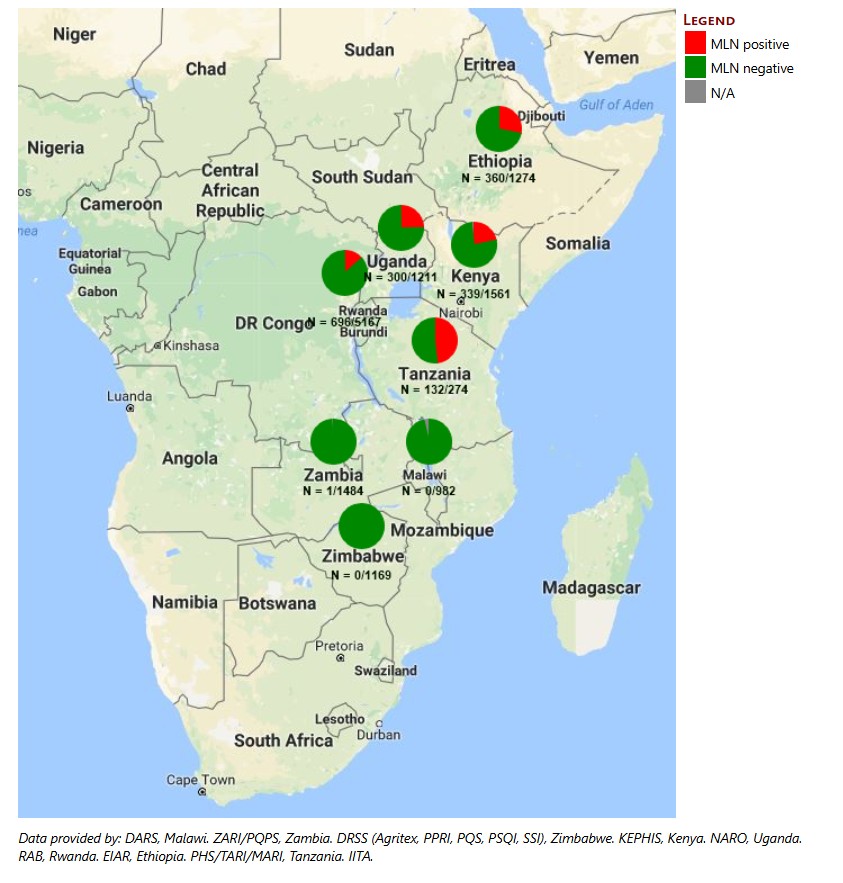
Figure 1(left): MLN surveillance status in Sub-Saharan Africa
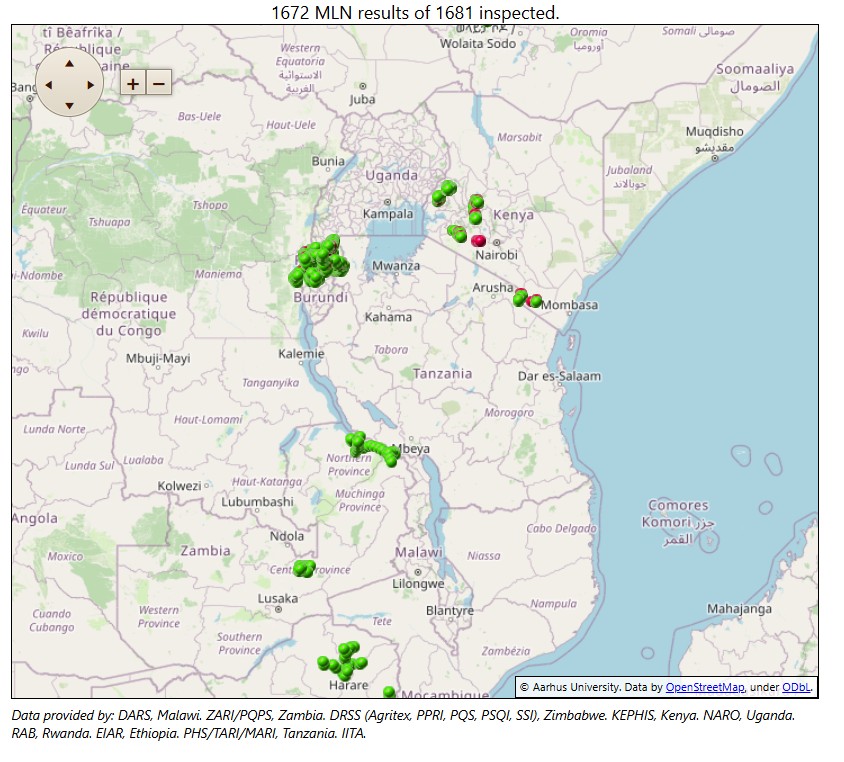
Figure 2(right): MLN surveillance points uploaded in MLN web portal during 2024.
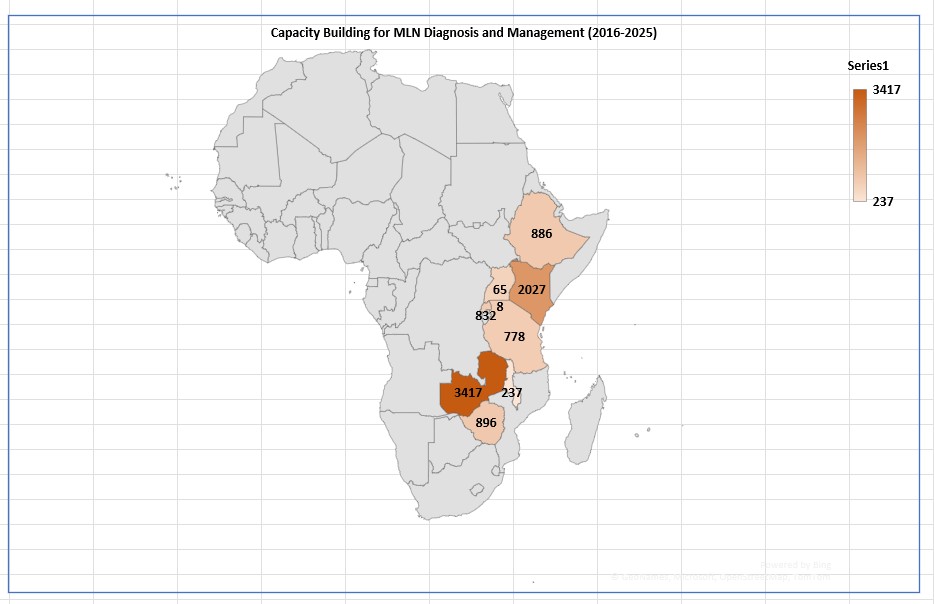
Fig3: MLN frequency in Eastern and Southern Africa through smart surveillance.
This massive information stream fed into the MLN Surveillance Data Management Toolbox, an interactive regional radar of disease hotspots and risk zones. Because of these coordinated surveillance corridors and trained inspectors, more than 400 NPPO officers—no new country outside Eastern Africa has reported MLN since 2016. Southern Africa remains MLN-free. A true continental victory.
The Digital Revolution: A Seed System That Sees, Learns, and Responds
With MCMV proven to be seed-borne, Africa needed more than surveillance, it needed a digital shield. CIMMYT and IITA, working with KEPHIS and KALRO, launched the Maize Seed Tracker (MST), a mobile–web platform transforming how seed is monitored, tested, and certified.
Built on the ODK platform, MST enables seed growers and inspectors to submit GPS-tagged, time-stamped data on field history, MLN symptoms, and seed quality—online or offline. MST became the backbone for enforcing MLN-free production standards, reducing seed rejection, improving traceability, and allowing early intervention long before problems escalate. For the first time, the maize seed system had eyes everywhere.
Kenya 2025: A Breakthrough Year for Clean Seed Leadership
The year 2025 became a milestone. A national stakeholder meeting brought unprecedented momentum. More than 35 KEPHIS officers were onboarded, and a team of 10–15 Clean Seed Champions was formed to drive implementation.
Fig4: Data points recorded from seed production area during seed tracker implementation in Kenya.
Using individual MST user IDs, the team collected 396 data points across 15 counties and 29 sub-counties, surpassing the national target. Kenya’s seed surveillance and certification system is now one of the most advanced in Africa—highlighted globally through the CIMMYT blog and partner platforms.
Phytosanitary Strength: A Multi-Stage quarantine proof Against MLN
Protecting Africa required more than detection—it required zero-tolerance seed movement protocols. CIMMYT established one of the world’s strongest phytosanitary pipelines:
- Seed treatment using validated chemical treatment for decontamination of MCMV.
- Diagnostic testing at CIMMYT Nairobi, plus independent confirmation at KEPHIS.
- Quarantine grow-outs in Harare, identifying any latent infection.
- Final certification before seed enters MLN-free countries.
- Movement only with zero virus detection—no exceptions.
Fig5: MLN quarantine facility to monitor the MLN during the seed movement in Plant Quarantine Services Institute (PQSI), Zimbabwe.
This secured multilayer quarantine system protected seed companies, restored regional trade, and protected millions of farmers in non-endemic countries.
The partners network in the region Behind the Success
More than 5,000 extension workers, seed company staff, growers, and NARES partners were trained in MLN-free seed production, surveillance, rogueing, and phytosanitary compliance.
They became Africa’s frontline defenders—ensuring every seed lot, every field, every sample meets MLN-free standards. Their collective skill is now one of Africa’s strongest biosecurity assets.
Fig6: Overview of capacity building during last decade to various partners and stakeholders.
A Future Secured—And a Model Worth Expanding
Africa’s MLN response is more than a containment success—it is a continental blueprint for future threats. By combining surveillance, diagnostics, digital innovation, phytosanitary rigor, and human capacity, Africa transformed a near-disaster into a lasting victory.
Farmers regained hope. Seed companies rebuilt trust. Policymakers gained evidence. And millions of families remained food secure.
As climate change accelerates pest risks and trade expands disease pathways, these systems must be strengthened—not abandoned. Continued donor investment will scale what works: better digital tools, stronger labs, advanced seed testing, more quarantine capacity, and a new generation of plant health leaders.
Africa has shown that when science, systems, and solidarity converge, plant diseases can be stopped. MLN was the proof. What comes next depends on sustaining and expanding this moment.



 Topics
 Species