Bern, Switzerland
20.01.2026
Das Arbeitsprogramm 2026 bis 2029 von Agroscope greift die wichtigsten Herausforderungen der Schweizer Land- und Ernährungswirtschaft, insbesondere der landwirtschaftlichen Praxis auf. Im Fokus stehen sechs Schwerpunktthemen, die das Forschungsinstitut in 42 Forschungsprogrammen und rund 360 Projekten bearbeiten wird. Bereiche wie Pflanzenschutz, Pflanzenzüchtung, Anpassung an den Klimawandel und Wirtschaftlichkeit werden gestärkt.
 © Agroscope
Die inländische Nahrungsmittelproduktion sichern, Bauernfamilien ein faires Einkommen ermöglichen und die negativen Umweltwirkungen reduzieren: Dies sind wichtige Herausforderungen der Schweizer Land- und Ernährungswirtschaft. Mit seinem neuen Arbeitsprogramm 2026 bis 2029 will Agroscope einen Beitrag dazu leisten, diese und weitere Herausforderungen zu meistern und die Zielkonflikte der landwirtschaftlichen Produktion zu reduzieren.
Forschung vom Feld und Stall auf den Teller und zurück
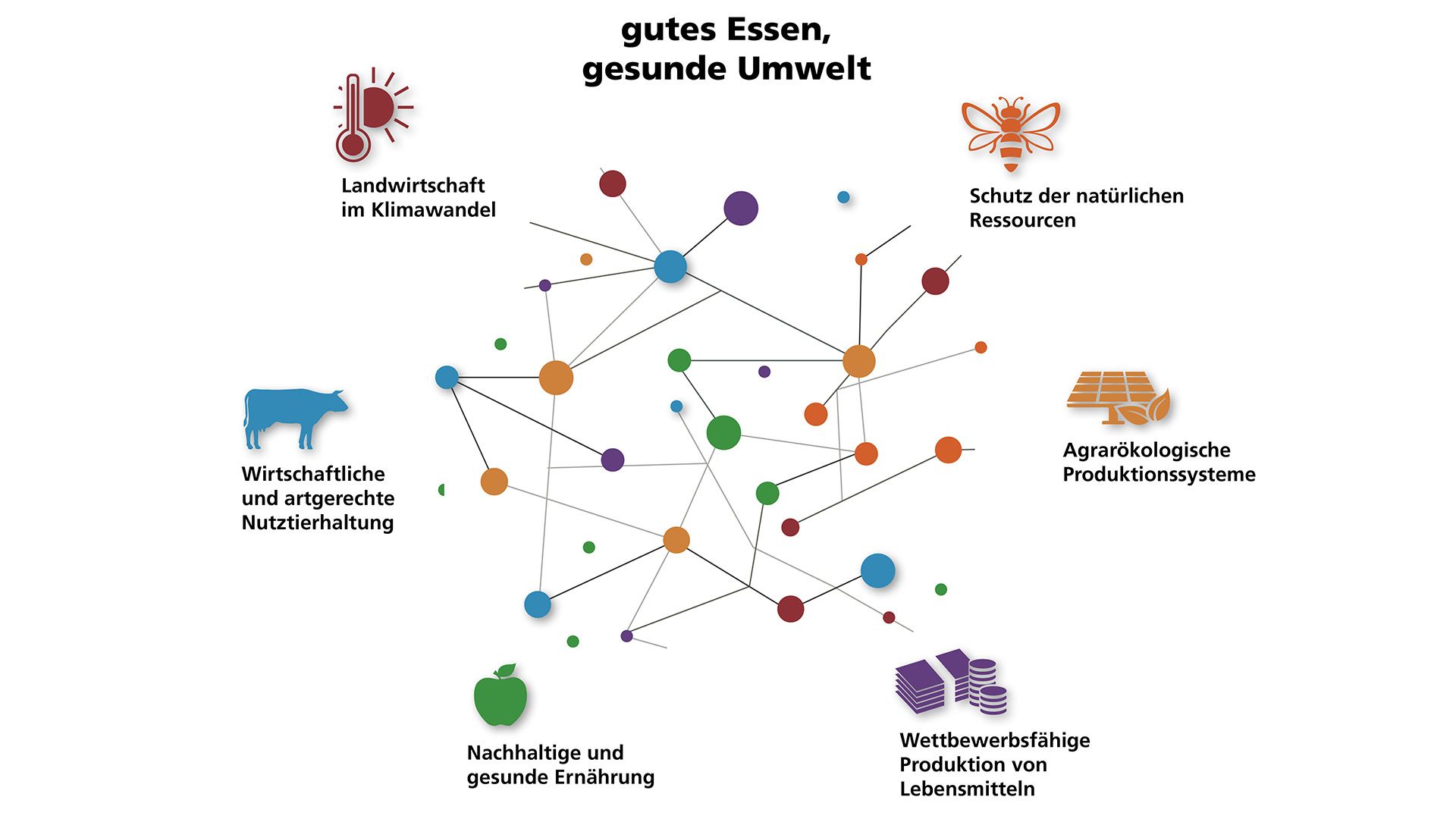
Das neue Arbeitsprogramm fokussiert weiterhin auf sechs miteinander verknüpfte Schwerpunktthemen: Wettbewerbsfähige Produktion von Lebensmitteln, Landwirtschaft im Klimawandel, Schutz der natürlichen Ressourcen, agroökologische Produktionssysteme, wirtschaftliche und artgerechte Nutztierhaltung sowie eine nachhaltige und gesunde Ernährung. Zu diesen Schwerpunkten forscht Agroscope themenübegreifend im Gesamtsystem der Land- und Ernährungswirtschaft. Ziel ist es, Lösungen zu entwickeln, welche die Agrar- und Ernährungssysteme ökologisch, wirtschaftlich und sozial nachhaltiger gestalten.
Neuerungen gegenüber letztem Arbeitsprogramm 2022
Agroscope stärkt die Forschung in Bereichen mit grossen Herausforderungen wie beispielsweise bei der Anpassung an den Klimawandel, Wassereffizienz, dem Schutz der Kulturen insbesondere im Gemüse- und Ackerbau, der nachhaltigen Tierproduktion und bei der Reduktion von Nährstoffverlusten. Da die landwirtschaftliche Produktion für die Bauernfamilien sozial und ökonomisch nachhaltiger werden soll, wird auch die Forschung zu Wirtschaftlichkeit und Wertschöpfungen erweitert. Zudem hat das Parlament mehr finanzielle Mittel für den Pflanzenschutz und die Pflanzenzüchtung gesprochen, was diese besonders herausfordernden Themen mit zusätzlichen Forschungsprojekten stärkt.
Ausrichtung auf Wirkung und Praxisnutzen
Das Motto «Wir forschen mit und für die Bäuerinnen und Bauern» wird im neuen Arbeitsprogramm noch wichtiger. Es ist, konsequenter als bisher, auf den Nutzen für und die Wirkung in der landwirtschaftlichen Praxis ausgelegt – ohne die dafür notwendige Grundlagenforschung zu vernachlässigen. Jedes der 42 Forschungsprogramme behandelt ein spezifisches Thema, definiert Ziele und erwartete Wirkungen. Die Praxisrelevanz der Projekte und der Wissenstransfer werden durch eine starke Einbindung der Akteure aus Praxis, Bundesverwaltung, Beratung und Kantonen sichergestellt.
Umfassende Bedürfniserhebung
Das Arbeitsprogramm entstand in einem strukturierten Prozess mit zahlreichen Branchen, Verbänden, Organisationen und Interessensgruppen der Land- und Ernährungswirtschaft. Rund 70 Organisationen haben über 650 Anliegen eingereicht, die gemeinsam priorisiert wurden. Agroscope hat zudem übergeordnete Strategien des Bundesrats, Zukunftsvisionen für die Land- und Ernährungswirtschaft und die sich wandelnden gesellschaftlichen Anforderungen berücksichtigt.
Die Inhalte des neuen Arbeitsprogramms werden vom Agroscope-Rat positiv gewürdigt und unterstützt. Dieses beratende Gremium setzt sich aus Vertreterinnen und Vertretern der Verwaltung, Wissenschaft und landwirtschaftlichen Praxis zusammen.
Mehr über «Vom Feld und Stall auf den Teller: Agroscope richtet sein neues Arbeitsprogramm stärker auf Wirkung und Praxisnutzen aus.»
Video: «Agroscope stellt sein Arbeitsprogramm 2026–2029 vor»
Arbeitsprogramm 2026−2029
Dokumente
Du champ à l'assiette, de l'étable à l’assiette: le nouveau programme d’activité d’Agroscope met davantage l’accent sur l'impact et l'utilité pour la pratique
Le programme d’activité 2026 à 2029 d’Agroscope répond aux principaux défis auxquels font face l’agriculture et la filière alimentaire, en particulier ceux de la pratique agricole. Structuré autour de six thèmes prioritaires, il se décline en 42 programmes de recherche et quelque 360 projets. Des domaines tels que la protection des plantes, l’amélioration des plantes, l'adaptation au changement climatique et la rentabilité seront renforcés.
 © Agroscope
Assurer la production alimentaire indigène, permettre aux familles paysannes d'obtenir un revenu équitable et réduire les effets négatifs sur l'environnement: tels sont les principaux défis auxquels sont confrontées l’agriculture et la filière alimentaire suisse. Avec son nouveau programme d’activité 2026-2029, Agroscope veut contribuer à relever ces défis – et bien d'autres – tout en réduisant les conflits d'objectifs de la production agricole.
Du champ à l’assiette, de l’étable à l’assiette et inversement
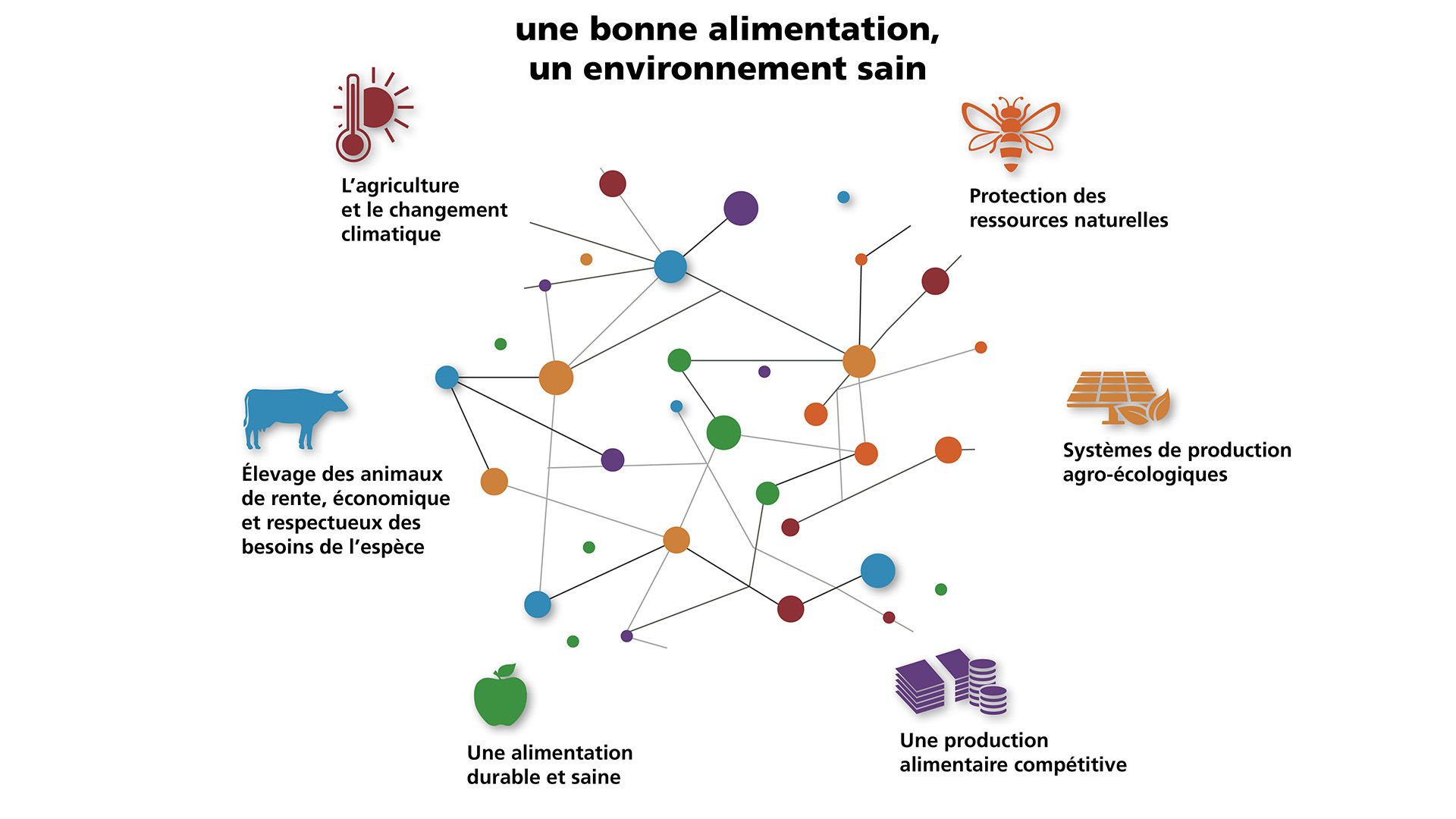
Le nouveau programme d’activité continue à s’articuler autour de six thèmes prioritaires interdépendants: la production alimentaire compétitive, l'agriculture et le changement climatique, la protection des ressources naturelles, les systèmes de production agro-écologiques, l'élevage des animaux de rente économique et respectueux des besoins de l’espèce, ainsi qu'une alimentation durable et saine. Agroscope mène une recherche systémique sur ces thèmes prioritaires en prenant en compte l'ensemble de l’agriculture et de la filière alimentaire. L'objectif est de développer des solutions qui rendent les systèmes agricoles et alimentaires plus durables sur les plans écologique, économique et social.
Nouveautés par rapport à l’ancien programme d’activité de 2022
Agroscope renforce sa recherche dans des domaines confrontés à des défis majeurs, tels que l'adaptation au changement climatique, l'efficience de l’utilisation de l'eau, la protection des cultures, en particulier dans les cultures maraîchères et les grandes cultures, la production animale durable ainsi que la réduction des pertes d'éléments nutritifs. Afin de contribuer à une production agricole socialement et économiquement plus durable pour les familles paysannes, la recherche sur la rentabilité et la création de valeur est également élargie. En outre, les moyens financiers supplémentaires alloués par le Parlement à la protection et à l’amélioration des plantes permettent de renforcer ces thématiques particulièrement exigeantes grâce à des projets de recherche supplémentaires.
Orientation sur l'impact et l'utilité pour la pratique
La devise «Nous faisons de la recherche avec et pour les agricultrices et agriculteurs» prend encore davantage de sens dans le nouveau programme d’activité. L’accent est mis de manière encore plus systématique sur l'impact et l’utilité pour la pratique agricole - sans pour autant négliger la recherche fondamentale indispensable. Chacun des 42 programmes de recherche traite d'un thème spécifique, définit les objectifs et les effets attendus. La forte implication des acteurs de la pratique, de l'administration fédérale, de la vulgarisation et des cantons garantit à la fois la pertinence des projets par rapport à la pratique et un transfert efficace des connaissances.
Vaste enquête sur les besoins
Le programme d’activité a été élaboré dans le cadre d'un processus structuré impliquant de nombreuses branches, associations, organisations et groupes d'intérêt de l'agriculture et de la filière alimentaire. Environ 70 organisations ont soumis plus de 650 propositions qui ont été priorisées. Agroscope a en outre pris en compte des stratégies de niveau supérieur du Conseil fédéral, des visions d'avenir pour l'agriculture et la filière alimentaire ainsi que les attentes sociétales en constante évolution.
Le contenu du nouveau programme d’activité a reçu une appréciation positive et bénéficie du soutien du Conseil Agroscope. Cet organe consultatif réunit des représentantes et représentants de l'administration, de la science et de la pratique agricole.
Davantage d'informations sur «Du champ à l'assiette, de l'étable à l’assiette: le nouveau programme d’activité d’Agroscope met davantage l’accent sur l'impact et l'utilité pour la pratique.»
Vidéo: «Agroscope présente son programme d’activité 2026-2029» (afficher les sous-titres français dans les paramètres)
Programme d’activité 2026-2029
Documents
From field and barn to plate: Agroscope’s new work programme places a greater focus on impact and practical benefits
Agroscope’s 2026-2029 Work Programme addresses the most important challenges facing the Swiss agriculture and food sector, and agricultural practitioners in particular. The focus is on six key issues to be addressed by the research institute in 42 research programmes and around 360 projects. Areas such as plant protection, plant breeding, climate-change adaptation and economic efficiency will be strengthened.
 © Agroscope
Safeguarding domestic food production, enabling farming families to earn a fair income and reducing the negative environmental impacts: these are important challenges facing the Swiss agriculture and food sector. With its new 2026-2029 Work Programme (WP), Agroscope aims to make a contribution to meeting these and further challenges, and to reducing the trade-offs of agricultural production.
Research from field and barn to plate and back
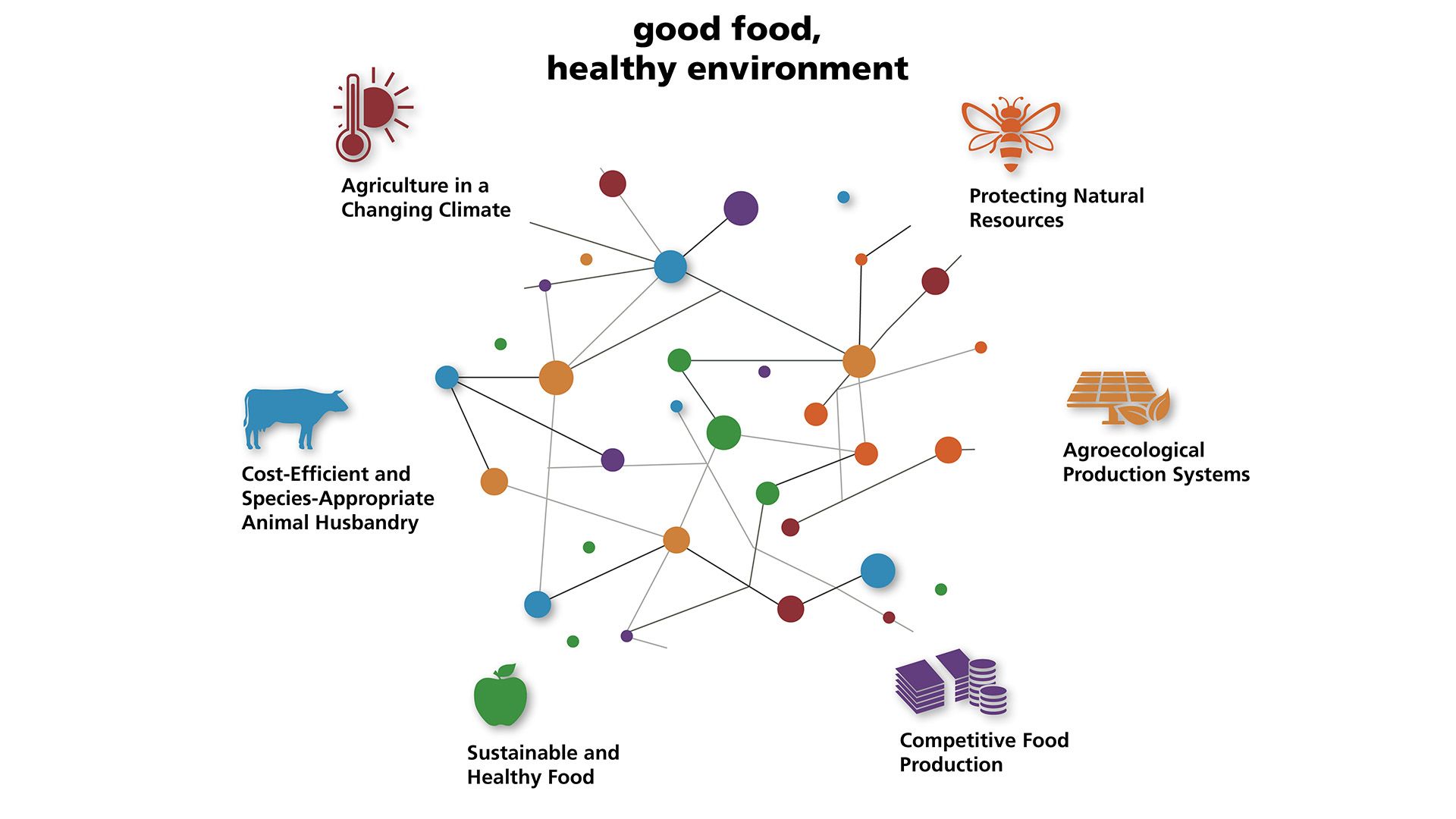
The new Work Programme continues to focus on six interlinked core themes: competitive food production, agriculture in a changing climate, protecting natural resources, agroecological production systems, cost-efficient and species-appropriate animal husbandry, and sustainable and healthy food. Agroscope conducts cross-disciplinary research across the entire agriculture and food sector on these focus areas. The aim is to develop solutions for increasing the ecological, economic and social sustainability of the agriculture and food system.
Novel developments vis-à-vis the last Work Programme
Agroscope is strengthening research in the areas facing major challenges, such as climate-change adaptation, water efficiency, crop protection, particularly in vegetable and field crops, sustainable livestock production and reduction of nutrient losses. Since the aim is to improve the social and economic sustainability of agricultural production for farming families, research into cost-efficiency and value creation is also being expanded. The Swiss Parliament has also allocated additional funds for plant protection and plant breeding, which strengthens these particularly challenging subject areas with additional research projects.
Focus on impact and practical benefits
The motto ‘We research with and for farmers’ gains even greater importance in the new Work Programme. More systematically than before, the WP is designed for the benefit of and its impact on agricultural practice, without neglecting the basic research that is necessary for this. Each of the 42 research programmes addresses a specific topic as well as defining goals and expected impacts. The practical relevance of the projects and knowledge transfer are ensured by the strong involvement of stakeholders from agricultural practice, the Federal Administration, the agricultural extension and the Cantons.
Comprehensive assessment of needs
The Work Programme was developed via a structured process involving many sectors, associations, organisations and stakeholder groups within the agriculture and food sector. Around 70 organisations submitted over 650 proposals which were prioritised jointly. In addition, Agroscope took into account overarching strategies of the Swiss Federal Council, future visions for the agriculture and food sector, and changing social requirements.
The content of the new Work Programme has been positively received and supported by Agroscope Council. This advisory body is composed of representatives from the Federal Administration, science and agricultural practice.
More about “From Field and Barn to Plate: Agroscope’s New Work Programme Places a Greater Focus on Impact and Practical Benefits”
Video: “Agroscope Presents its 2026–2029 Work Programme” (show English subtitles under settings)
Agroscope Work Programme 2026-2029
Documents


 Topics
 Species