USA
November 11, 2025
A new study published in Molecular Plant-Microbe Interactions (MPMI) has identified Aegilops cylindrica, a wild grass closely related to wheat, as a powerful genetic reservoir for resistance against the devastating fungal pathogen Zymoseptoria tritici—the cause of Septoria tritici blotch (STB). These findings open the door to breeding more resilient wheat varieties and reducing the global dependence on chemical fungicides.
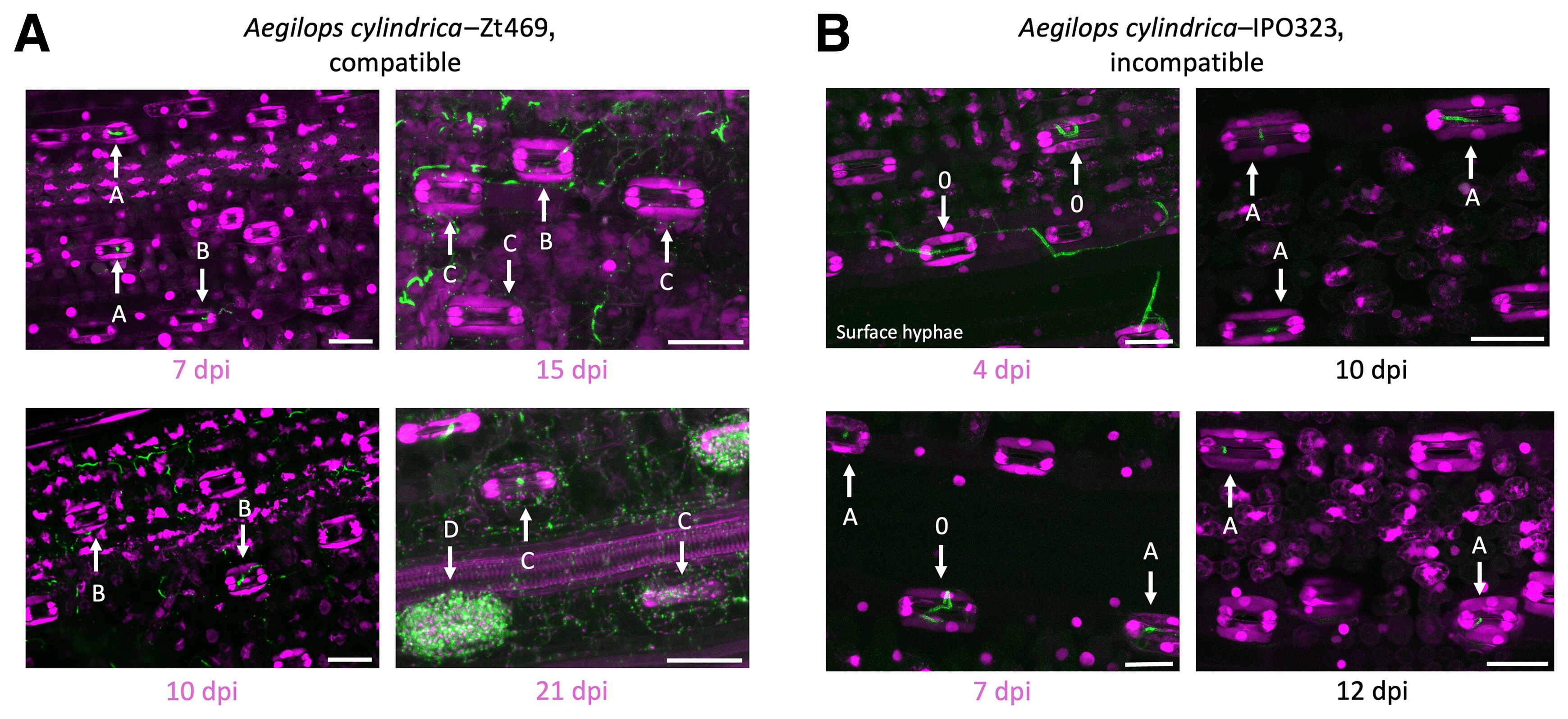
The research team—led by Eva Stukenbrock from the Botanical Institute in Kiel, Germany, and the Max Planck Institute for Evolutionary Biology in Plön, Germany—discovered that A. cylindrica possesses unique defense mechanisms not found in cultivated wheat. By combining genetic and microscopic analyses, researchers revealed that resistance to Z. tritici in this wild species is established at an early stage of infection—right at the leaf's stomatal openings, where the fungus would normally gain entry. Moreover, transcriptome profiling exposed how virulent fungal isolates suppress key immune-related genes in A. cylindrica, whereas A. cylindrica maintains their expression when infected with avirulent and wheat-specialized isolates to block infection.
“What excites us most," Stukenbrock noted, “is that Aegilops cylindrica provides entirely new insights into plant immunity against Z. tritici that were previously unknown in wheat. This discovery offers breeders new targets for enhancing resistance and developing more sustainable control strategies."
This is the first study to generate a transcriptome assembly for A. cylindrica, a species with a simpler genome yet strong parallels to wheat's pathogen interactions. The findings not only highlight novel candidate resistance genes but also shed light on how Z. tritici overcomes plant defenses by suppressing key immune responses—a process Stukenbrock refers to as “molecular sabotage."
Beyond its implications for wheat improvement, this work advances understanding across plant pathology, genetics, and sustainable agriculture. It underscores the value of conserving wild plant relatives as sources of hidden traits that can help secure global food supplies. “This research expands our view of plant-pathogen interactions and provides a roadmap for developing wheat varieties capable of resisting one of the world's most damaging cereal diseases," the team explained.
For additional details, read “Comparative Transcriptomic and Microscopic Analyses of a Wild Wheat Relative Reveal Novel Mechanisms of Immune Suppression by the Pathogen Zymoseptoria tritici," by Rune Hansen, Wagner C. Fagundes, and Eva H. Stukenbrock. Published open access in MPMI.


 Topics
 Species